The fastest way to raise the level of a ballroom is to raise the level of the people teaching in it. Michael's work as a teacher trainer is aimed one level up from the student: giving instructors a rigorous, examinable system for why the dancing works, not just a sequence to copy. He builds exam content and a technique question bank for Dance Vision, and examines candidates for Dance Vision and AIDA — the same standard he was measured against, now applied on the other side of the table.

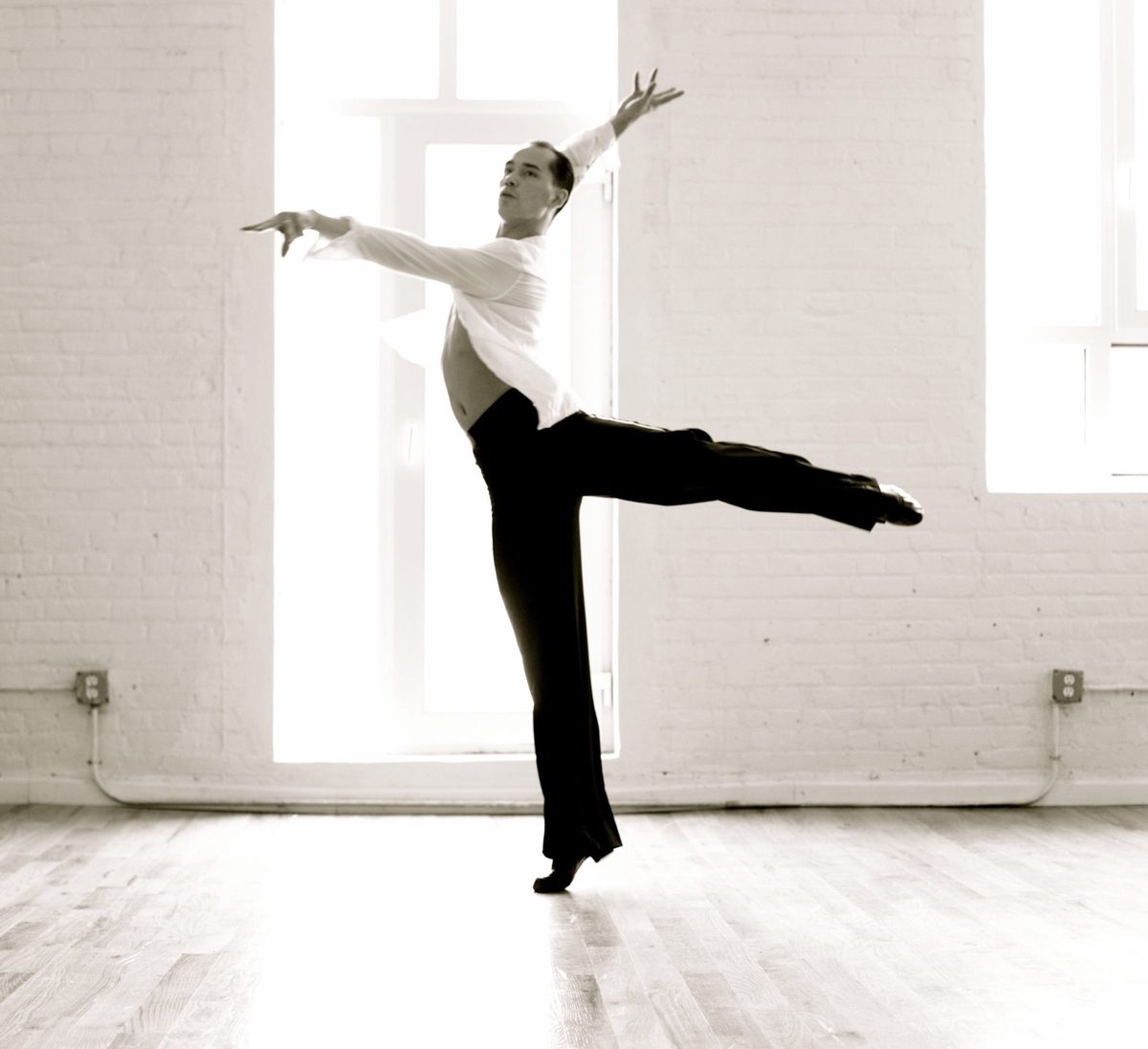
Michael Choi in an extended line in a white-brick studio
The line, with nothing else in the room to look at

The boards

Examining bodies.

01

Dance Vision

Examiner — Chair of the Ballroom Department

History

Dance Vision began in 1992 as a Las Vegas video company — Wayne and Donna Eng filming the era's champions so that great teaching could travel beyond the room it happened in. It became the largest instructional catalog in ballroom, more than five hundred titles deep, and in 2001 the method behind it was standardized into the DVIDA syllabus — a full teaching system now recognized by the National Dance Council of America and used by hundreds of independent studios and teachers across the country. Where the older societies inherited their technique from London, Dance Vision built an American system from the floor up. It is the body Michael examines under as Chair of the Ballroom Department.

02

AIDA

American International Dancers Association — Examiner · Co-chair of the Examining Committee

History

Before it was AIDA, it was the USISTD — the United States Imperial Society of Teachers of Dancing — begun in San Francisco in 1961 and incorporated in New Jersey in 1967 to carry the ISTD's London-set standards into American studios. For most of its life it was the Imperial Society's American examining body; more recently it took the name American International Dancers Association, broadening its reach across the American styles while keeping the rigor it inherited. It runs a full ladder of professional degrees — Student Teacher, Associate, Member, and Fellowship — across International Ballroom and Latin, American Smooth and Rhythm, and Theatrical Dance. Michael examines for AIDA and co-chairs its Examining Committee.

03

ISTD

Imperial Society of Teachers of Dancing, London — Fellow, Ballroom & Latin

History

The ISTD is the oldest and most influential of the three — founded in London on 25 July 1904 and reorganized in the 1920s into the technical faculties that still define it. Its Modern Ballroom branch dates to that 1924 restructuring; the Latin American faculty followed in 1951. When a teacher anywhere refers to "the technique" — positions of the feet, alignment, amount of turn, rise and fall, footwork, sway, contrary body movement — they are pointing, ultimately, at the system the Imperial Society set down and the champions who wrote for it. Today it conducts roughly 120,000 examinations a year across dozens of countries. Michael is a Fellow — its highest teaching credential — in both Ballroom and Latin.
For candidates

Taking your examinations.

Two things decide everything about an examination: getting the right trainer, and knowing what the exam is for. Settle those and the path is short — one credential proves you can teach, another lets you sit at the judging table.

01

Credential to teach

The professional degree ladder — Student Teacher through Fellowship, with AIDA or Dance Vision. Train with a qualified coach who agrees you're ready, then take the exam — practical and theory. It's how you prove your standard, and the door to everything after.

02

Credential to judge

The NDCA adjudicator's license, built on your teaching credentials. An Associate degree lets you judge; Full Member or Fellow — with all four styles — puts you on championship panels. You earn the right to judge by first proving you can teach.

The path, step by step.

This is the whole process. It is more straightforward than the nerves suggest — one step at a time, in order.

1

Find your trainer — before anything else.

A qualified coach who has taken candidates through exams before, holding a credential at least one degree above the exam you're taking. Their job is to see the faults you can't see in yourself. One rule to plan for: your trainer and your examiner must be different people — no one can examine a candidate they trained in the previous six months.

2

Pick your board and your style.

AIDA or Dance Vision, in the style you teach — International Ballroom or Latin, American Smooth or Rhythm, plus Theatrical Dance at the Associate and Member levels. The two boards' ladders have the same shape (Dance Vision certifies through the DVIDA syllabus under its own labels); your trainer will help you choose.

3

Know the ladder.

Student Teacher (from 16) → Associate (from 17 — the first full professional degree, all your bronze figures) → Member (from 21, after two years' teaching — adds silver) → Fellowship (after three years as a Member — bronze through gold, taken before two examiners). Each degree absorbs the one below it. Nobody takes Fellowship first; everybody climbs.

4

Train until your coach says you're ready — then book.

The exam is scheduled when you and your trainer agree you're there — not the other way around. Apply at least 30 days before the exam date (late applications aren't accepted), give 14 days' notice if you must cancel, and line up your own partner — professional or amateur.

5

Take the exam: practical and theory.

In the practical you dance the syllabus figures to music, as both Leader and Follower. In the theory you explain why they work — the technical headings, tempi, precedes and follows, and how you'd teach them. Grades run from Pass (65) to Honors (95+), and the lower of your two sections sets each dance's grade. One hard line to respect: dancing out of time is a mandatory fail — your trainer will have drilled this long before exam day.

6

Pass — then teach, and come back for the next degree.

To pass at any level is a real accomplishment; Honors is the icing. (If it doesn't go your way, there's a 30-day wait and you take it again — that's all.) And if judging is the goal: with an Associate degree or higher you can hold an NDCA adjudicator's license and judge everything except Championships; Full Member or Fellow in all four styles puts you on championship panels. The judging table is reached through the teaching ladder — there is no separate door.

You'll be more ready than you think.

The PDF is the same path on paper — everything above, from finding a trainer to the examining table.

The credentials behind it

The same standard, both sides of the table.

Fellowships

International Ballroom · International Latin · American Smooth (Dance Vision & AIDA)

Fellow, ISTD (London) — Ballroom & Latin

Licentiates

American Rhythm · Theatre Arts (Dance Vision & AIDA)

Examiner

Dance Vision · AIDA

Governance

AADTA Board of Directors · East Coast Vice President of the Professional Dancers Federation

For lessons and training information, get in touch.